Food security is both an issue and a major challenge for many developing countries. In the face of population growth and the effects of climate change, the right to adequate, available, and accessible food, produced in a way that is mindful of the sustainability of production factors, is far from being realized in many geographical areas. This contributes to the increased vulnerability of the most disadvantaged populations. Constantly engaged in the defense and protection of the rights of communities, CRADESC has distinguished itself since its creation through flagship actions in favor of the farming world, through various impactful initiatives in its areas of intervention. The right to food, which is included in economic, social, and cultural rights, occupies a privileged place in CRADESC’s intervention choices due to the stakes and challenges related to food security.
Food security and resilience
Introduction
The United Nations Sustainable Development Goal 2 also integrates the right to food through food security by working to improve nutrition and promote sustainable agriculture. Several other Sustainable Development Goals (SDGs) align with this effort to achieve food security and household resilience. Specifically, these are SDGs 3, 12, 13, and 17, which respectively focus on good health and well-being, establishing sustainable consumption and production patterns, the urgency of taking action to combat climate change and its impacts, and strengthening the means to implement and revitalize the global partnership.
The effectiveness of the right to food and, by extension, food security is intrinsically linked to the related rights of property and water. Indeed, cultivating and feeding oneself requires access to land, either as an owner or as a simple user. As for water, it is crucial not only to meet basic human needs but also for agriculture, which must feed more people as the resource becomes scarcer and agricultural practices are undergoing significant changes. In light of this situation, a structured action is necessary to develop resilient agriculture that takes into account the protection and promotion of the economic, social, and cultural rights of local communities.
It is in this context that CRADESC has implemented the food security and resilience program for peasant organizations in the face of the numerous challenges of family farming. This program, which has made significant strides through the structuring of peasant organizations into cooperative societies in the Niayes, operates in a context where the new political authorities of Senegal demonstrate a renewed commitment to achieving food sovereignty. This represents an additional opportunity to act in favor of agricultural actors to preserve their area of activity and ensure them decent incomes.
The implementation of the food security and resilience program takes place in a context where access to land for the peasant movement is increasingly threatened by rapid urbanization, the extractive sector, and state infrastructure projects in the Niayes area through expropriations and the involuntary displacement of populations, while family agriculture remains the main source of income for the majority of rural households in Senegal. Also, despite their undeniable and recognized economic role by public authorities, women remain marginalized in access to land and production factors in the agricultural sector. They are relegated to processing and marketing, while greater involvement in production activities could contribute substantially to their empowerment.

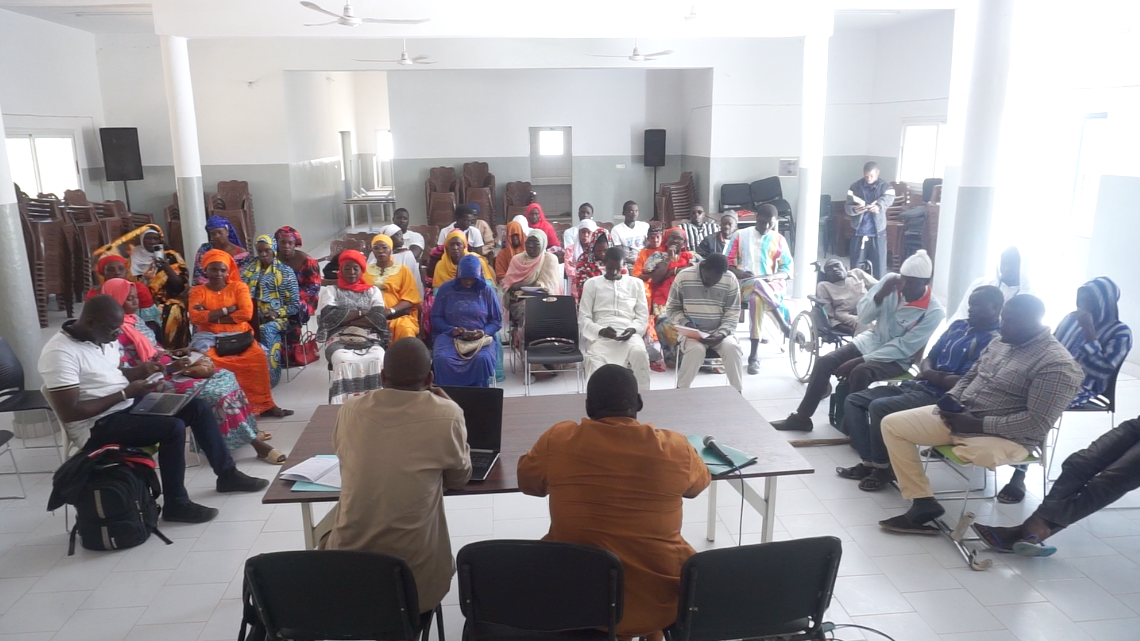
Visit to the field of the association of people living with a disability in Mboro.
In addition to the challenges related to the technical support of producers and marketing, agriculture must face the effects of climate change that increasingly impact production systems and make the future of family farming uncertain. This program addresses the necessity of acting in favor of the peasant movement, which must contend with the reduction of agricultural land, technological developments, and the consequences of climate change. The revitalization of producer organizations through their structuring into cooperatives, securing land rights for rural populations, strengthening governance, providing technical support, as well as modernizing production systems are prerequisites for achieving food security. The resilience of family farming thus arises as a necessity to provide appropriate responses to the changing needs, including for the most vulnerable.
General objective :
The overall objective of the program is to significantly contribute to the food security of households and the resilience of family farming in the face of various challenges related to changes in the rural world and the effects of climate change. The program aims to promote sustainable, resilient, competitive agriculture that brings progress to local communities.
Specific objectives :
Ensure the food security of communities by protecting their land rights and production factors.
Strengthen the organization of the peasant movement through cooperatives.
Strengthening the economic resilience of agricultural communities through the revitalization of the value chain and access to the market.
Promote a healthy and sustainable use of productive resources through the practice of agro-ecology.
Approach and methodology
A reinforcement of the resilience of communities against the threats posed by extractive projects.
Sustainable exploitation and fair governance of resources within local territories through the strengthening of communities’ technical capacities and knowledge of their rights.
A community-based approach focused on the ESC rights and highlighting the empowerment of the targets.
An important place given to agriculture (access to land and empowerment of producers).
Project implemented in the program
Support project for farmers in the Niayes (PAAN)
Issues of DESC in the Niayes :
- Senegal has a coastal and maritime zone that is 700 km long, characterized by a diversity of ecosystems and resources including mangroves, lagoons, swampy estuaries, and sandy beaches.
- A choice made in favor of the DESC: to act for the benefit of vulnerable communities (economic, social, and cultural justice) to bridge the gap in Francophone countries.
- Strategic intervention areas: for the protection of economic, social and cultural rights in relation to the concerns of local communities;
- The Niayes marked by: rapid industrialization, the growth of the extractive sector, industrial units, and the development of infrastructure projects, reduction of land in the first horticultural area of Senegal thus threatening the future of agriculture.
Methodological Approach :
- Advocacy around infrastructural issues: a community mobilization around the impacts of the Dakar-Tivaouane-Saint-Louis highway (5 groups of those affected and one (01) Union created to defend the rights of the communities).
- Strengthening the technical capacities of communities: on the knowledge of their rights (ESCR) and advocacy for access to agricultural land through the strategic downgrading of the restoration perimeter of the Niayes.
- 30% Campaign : for the inclusion of women in the redistribution of funds allocated to local communities in the regions of Thiès, Kédougou, and Matam.


Impact of the project
- CCDN: 250 OP
- 10 cooperatives and one union (umbrella organization)
- 469 cooperators
- 119 organizations and 347 individuals
- 40,437 producers (30.63% are under 35 years old and 40.5% are women)
- 9 agricultural cooperatives established in the Niayes area with the support of the Rosa Luxemburg Foundation and the West Africa Competitiveness Program (WACOMP/PACAO)

Photo : maraîchage zone des Niayes
Join our community
Sign up for our newsletter to stay informed about the activities and events of CRADESC.
Resource Library
Documentation on the activities and themes of the DESC and Gender program