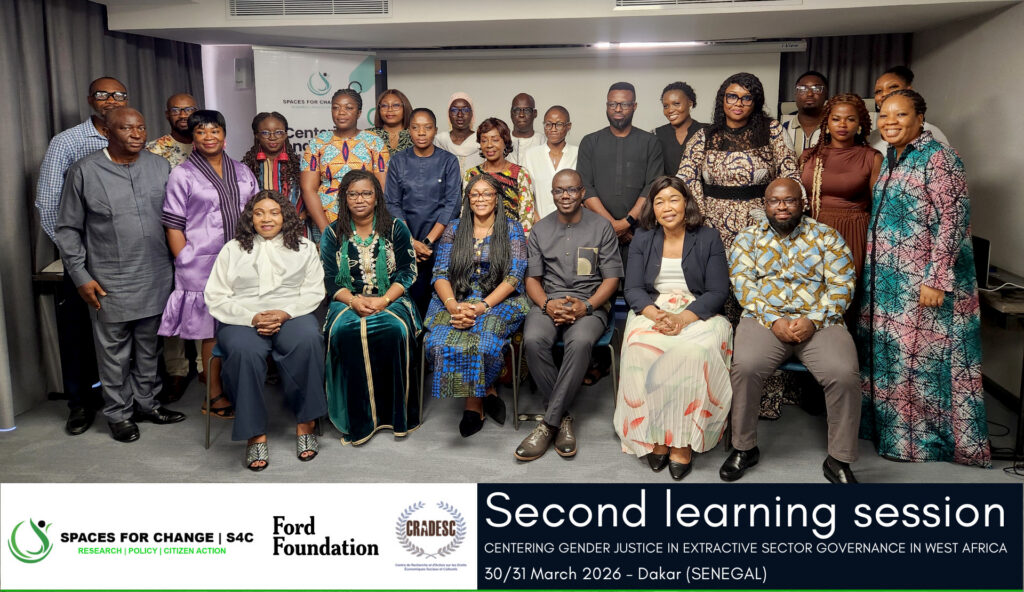
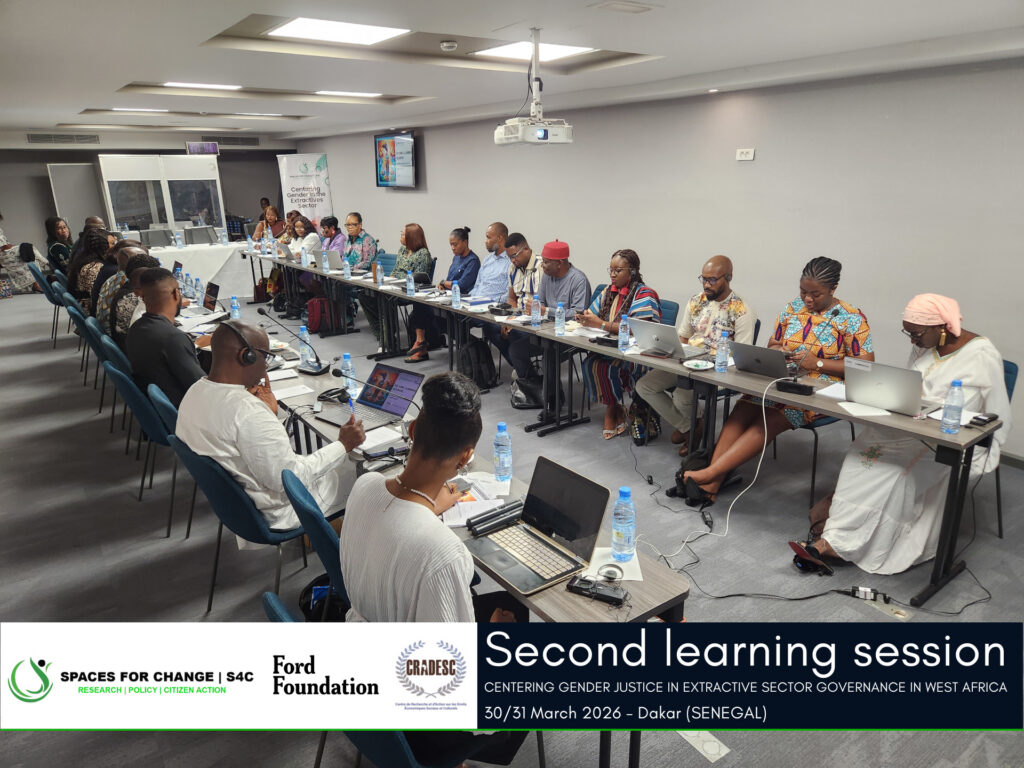
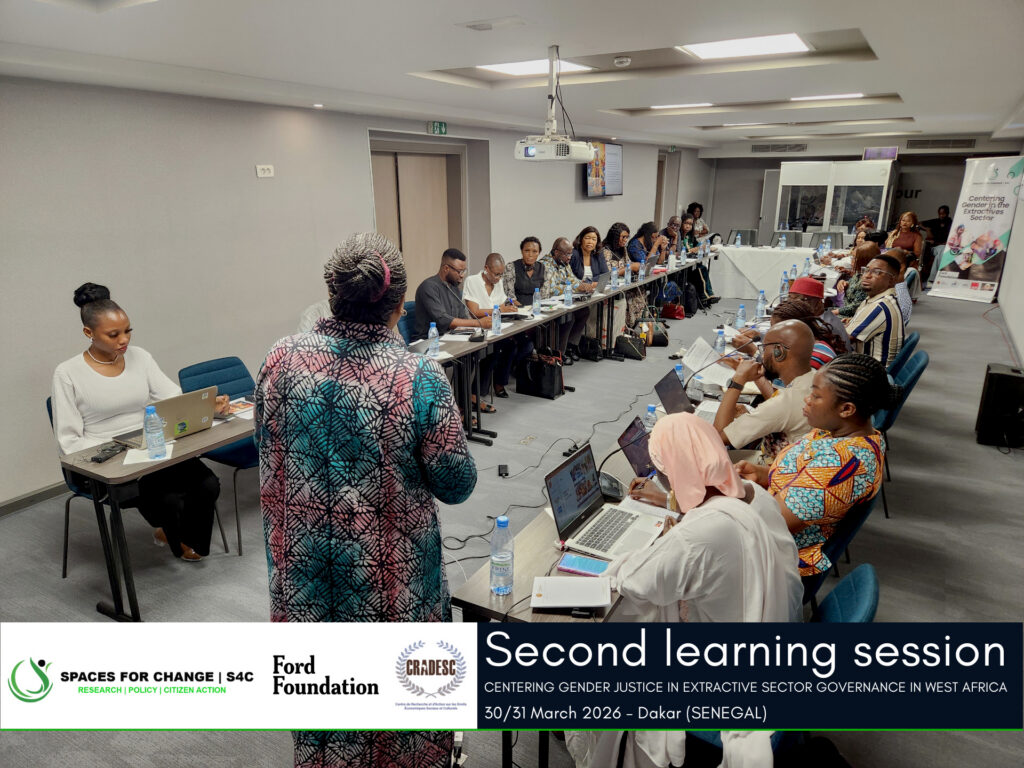
In Dakar, the second training session of the project “Putting Gender at the Heart of Extractive Justice” concluded on a positive note. Organized by CRADESC and Space for Change, this regional meeting provided an opportunity to consolidate progress, share experiences, and strengthen strategies for integrating gender considerations into the extractive sector in West Africa.
On March 31, CRADESC, in collaboration with Space for Change, marked the end of the second and final day of the learning session for the project “Putting Gender at the Heart of Extractive Justice.”
This session brought together several organizations involved in natural resource governance in West Africa, including the Africa Center for Energy Policy (ACEP), Spaces for Change (S4C), the Kebetkache Women Development & Resource Center, the Stakeholder Democracy Network (SDN), and the Socio-Economic Rights and Accountability Project (SERAP).
The participating organizations, representing Nigeria, Ghana, and Senegal, shared their progress as well as the challenges they have faced since the first session held in May 2025 in Accra. The discussions helped identify strategic levers for strengthening the systematic integration of gender considerations in the extractive sector.
The project is supported by the Ford Foundation and aims to promote inclusive governance, gender-sensitive community engagement, and institutional reforms that enable better addressing of gender inequalities in social policies and practices.
CRADESC Praised for Its Leadership
Participants commended CRADESC’s commitment to organizing and ensuring the success of this session. This initiative reinforces CRADESC’s commitment to promoting equitable and sustainable practices by placing gender at the center of public policies and development strategies.
Furthermore, the conclusion of this session marks an important milestone in the development of a gender-sensitive extractive justice system, driven by a network of organizations committed to transforming social and institutional practices in West Africa.
The participants leave with enhanced tools to amplify the voices of communities and promote gender-sensitive extractive justice at the regional level.