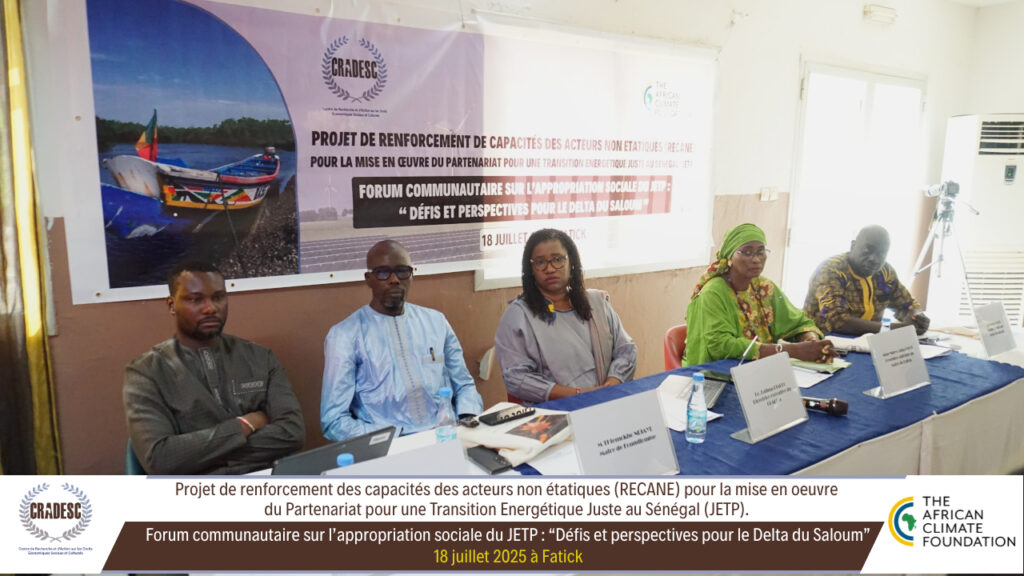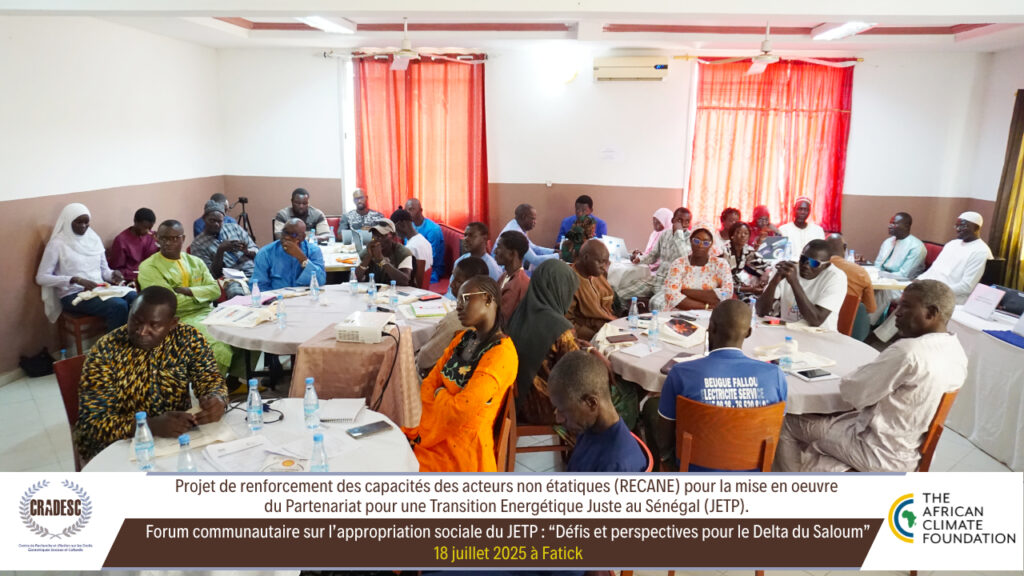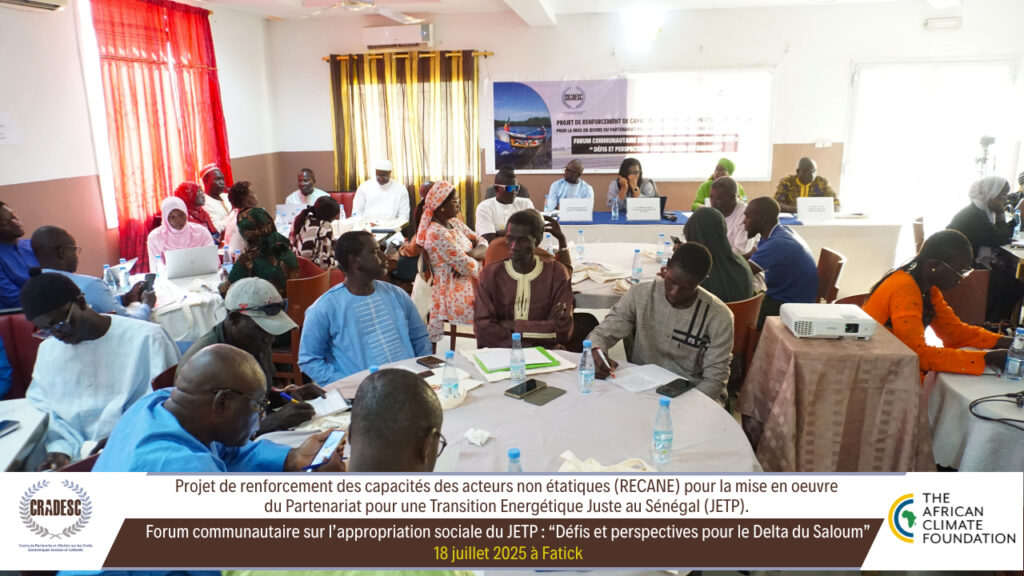
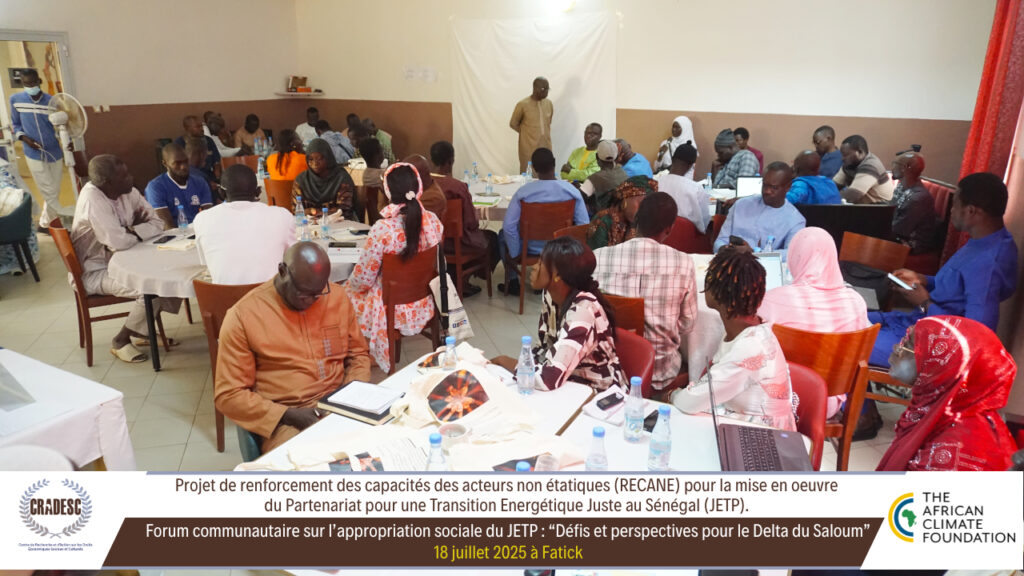
Fatick hosted, on July 18, the community forum of the Delta du Saloum for the social appropriation of the Partnership for a Just Energy Transition (JETP) in Senegal. This is an activity that is part of the implementation of the Capacity Building Project for Non-State Actors (RECANE) for the implementation of the JETP in Senegal, whose partner is the African Climate Foundation.
This forum is the second of its kind after the one in Saint-Louis to bring together several development stakeholders operating in the sectors of fishing, agriculture, livestock, beekeeping, oyster farming, local civil society, community media, local authorities, decentralized technical services, including academics, local students and researchers, to discuss the challenges and prospects of a just energy transition for their territory.
The objective is to promote the social appropriation of the just energy transition process through inclusive and participatory dialogue and to strengthen the participation of local actors in the governance mechanisms of the energy transition, according to the Director of CRADESC, who believes that there can be no energy transition without climate justice and social justice.
The first deputy mayor made a call for the promotion of renewable energies after following with interest the various presentations by experts and specialists. Ndéye Aida DIOUF also praised the organization of the forum.
Like many other citizens, the Mayor of Djilor has benefited from awareness-raising and capacity-building on the issues of renewable energy and energy transition. He calls on the State to go further in the energy transition starting from the municipalities.
The Saloum Delta is experiencing significant degradation mainly marked by anthropogenic activities such as the excessive cutting of wood progressively destroying the mangrove and intensified destructive fishing practices threatening the survival of certain species. Additionally, events related to climate change such as coastal erosion, land salinization, rising surface water temperatures, and sea level rise pose increasingly serious threats to a large part of the islands.
Aware of the challenges posed by the energy transition in this fragile context, local communities have decided to make their voices heard. They have formalized their concerns and expectations through a collective statement.