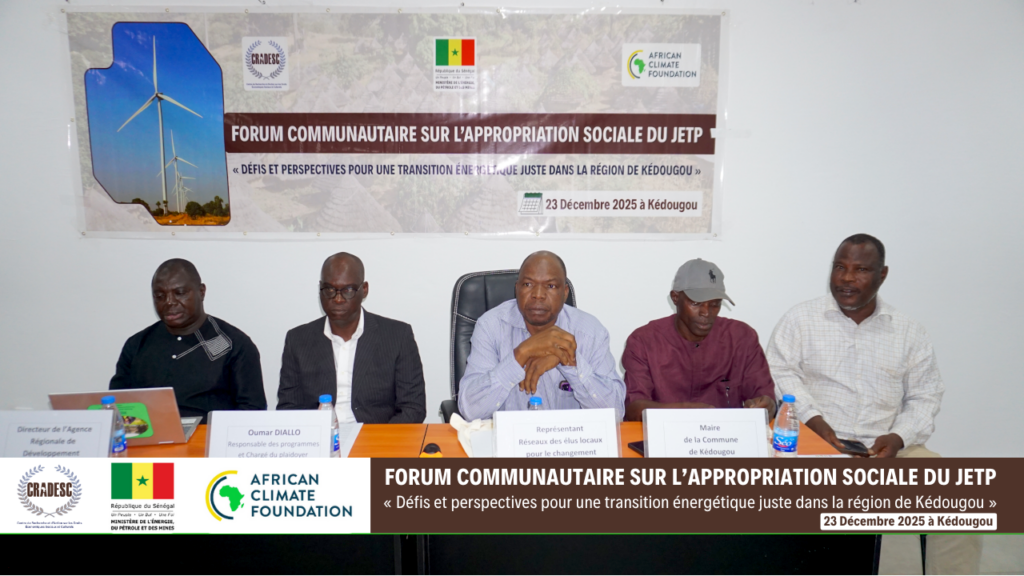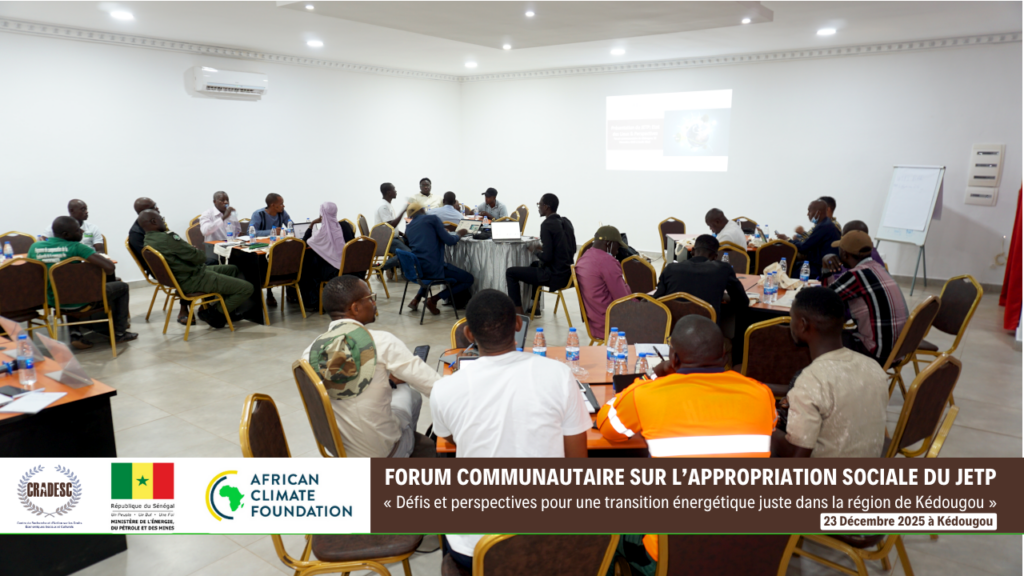
(online translation) The Kédougou region hosted a community forum on the Just Energy Transition, organized as part of the RECANE project (Capacity Building for Non-State Actors), implemented by CRADESC, in partnership with the African Climate Foundation (ACF). Held in support of the Just Energy Transition Partnership (JETP) in Senegal, this meeting particularly took into account the specific characteristics of this part of the southeast of the country.
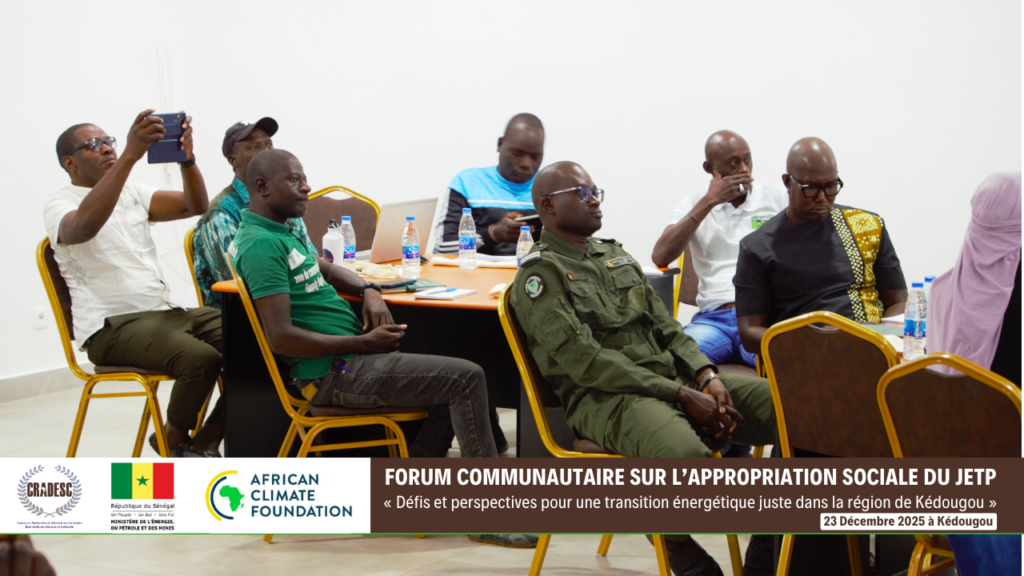
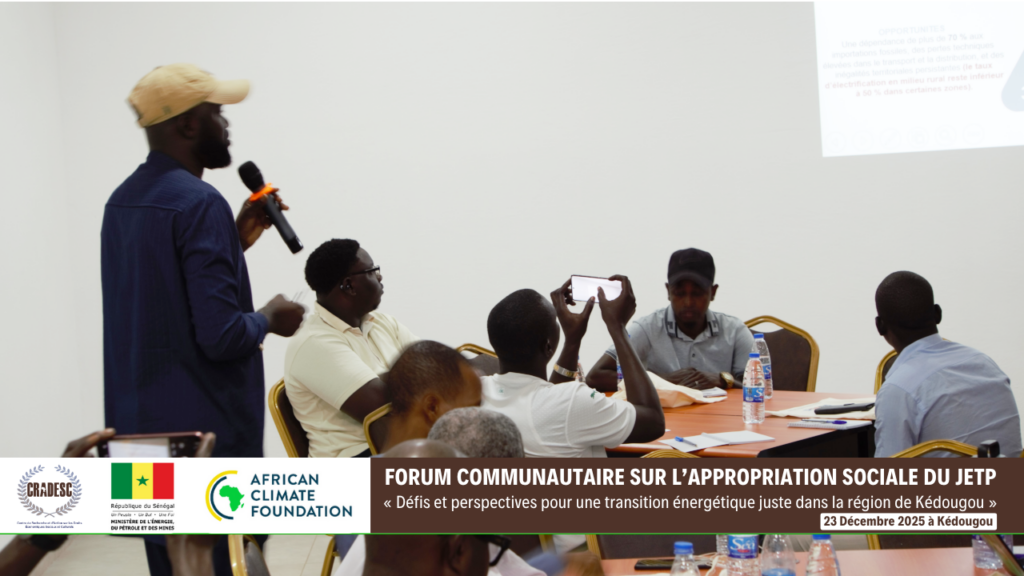
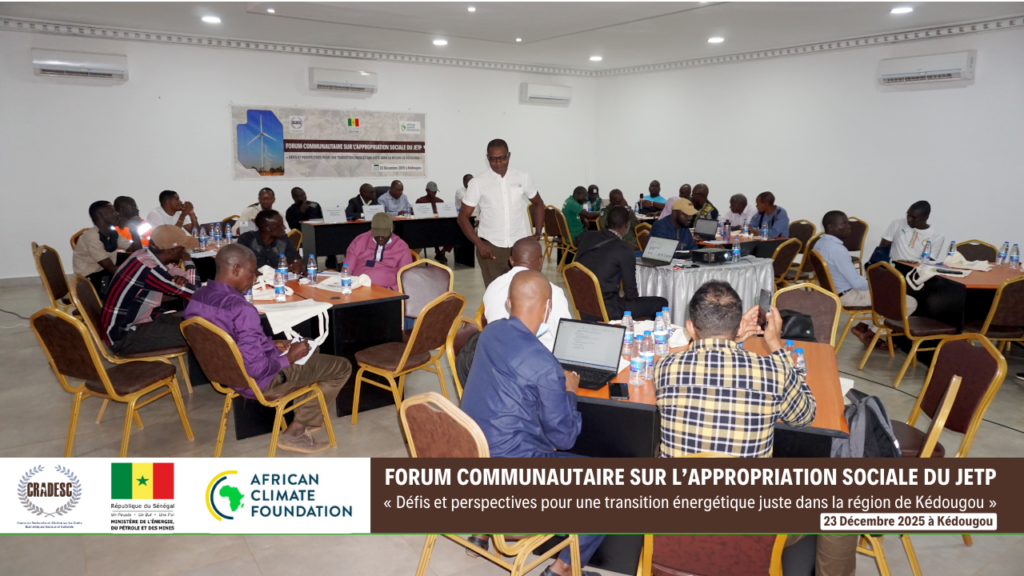
This forum brought together a variety of key actors: local authorities, mining actors (companies, cooperatives, and gold panners), farmers’ organizations and livestock associations, women and youth from rural areas, decentralized technical services, researchers, students, and regional institutions.
The goal was to promote social and territorial ownership of the just energy transition process through information, inclusive dialogue, and citizen participation.
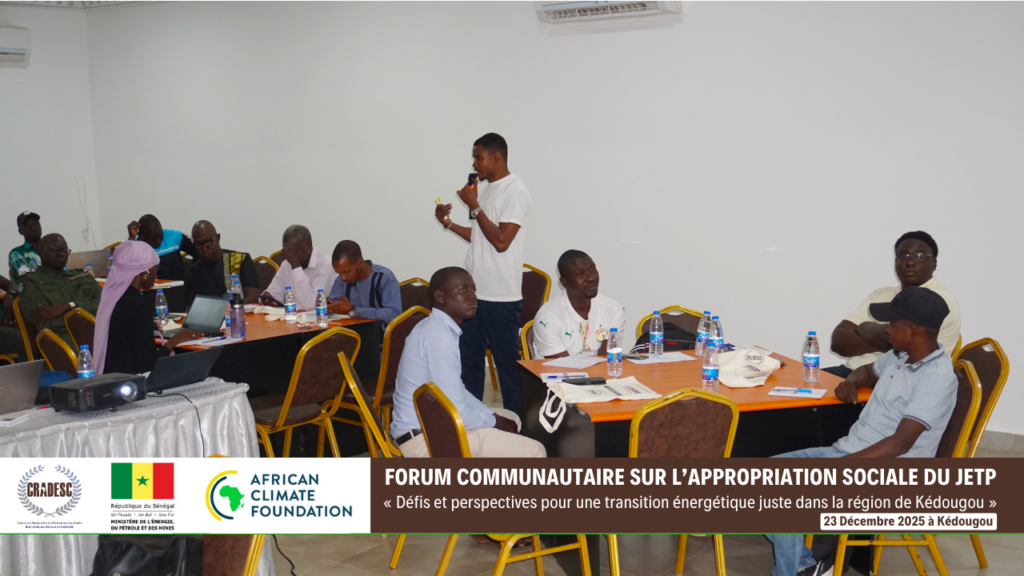
The discussions highlighted the expectations, concerns, and proposals of local communities, particularly regarding access to energy and the opportunities offered by renewable energy.
The Mayor’s representative calls for taking advantage of the forum to strengthen the energy transition in Kédougou
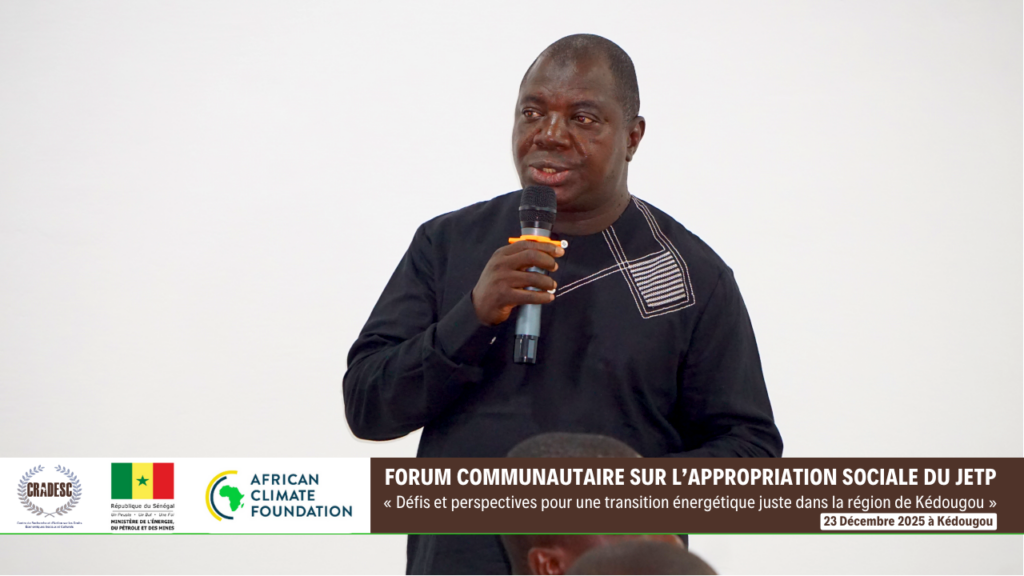
In his speech, the representative of the Mayor of Kédougou, Famara Dembélé, invited all participants to make the most of this platform for exchange. He highlighted the concrete commitment of the municipality to energy transition, illustrated by the existence of about ten boreholes powered by solar energy, helping to improve access to drinking water for the population.
He also emphasized the importance of capacity building, particularly through the training of municipal councillors and civil society organizations, in order to consolidate these achievements and ensure better local governance of energy projects.
For a sustainable and lasting energy transition
For his part, Mr. Kalidou Cissokho, Director of the Regional Development Agency (ARD) of Kédougou, advocated for the strengthening and sustainability of such initiatives. Indeed, these consultation spaces are essential to sustainably support local authorities and community stakeholders towards a fair, inclusive energy transition that is adapted to the realities of the territory.
For his part, Mr. Kalidou Cissokho, Director of the Regional Development Agency (ARD) of Kédougou, advocated for the strengthening and sustainability of such initiatives. Indeed, these consultation spaces are essential to sustainably support local authorities and community stakeholders towards a fair, inclusive energy transition that is adapted to the realities of the territory.
Kédougou holds considerable energy potential with exceptional sunshine suitable for photovoltaic production, an abundance of rivers on the “Fouta Jallon” massif and the Gambia River—favorable for hydroelectricity—as well as a forest biomass that can be sustainably utilized.
This potential contrasts with an economy dominated by artisanal and industrial mining, which, even though it contributes to income generation, is responsible for very high environmental pressure (pollution, deforestation, soil and water resource degradation), exacerbated by logging and charcoal production. It is to address these issues that this exchange platform was initiated.
A momentum driven by communities
Through this forum, the third of its kind after those in the Fatick region in the center and Saint-Louis in the north, the RECANE project confirms its commitment to strengthening the voice of communities in the national debate on the energy transition. The discussions highlighted the need to better align national policies with local initiatives, in order to ensure an energy transition that truly benefits the population while preserving social and environmental balances.
The forum concluded with the unanimous adoption of a declaration, in which the participants expressed their concerns and outlined their expectations. Kédougou declaration link.
The forum video reviews the key messages conveyed by local authorities and CRADESC, as well as the perspectives for an energy transition driven by the communities of Kédougou. Video link